Skip to content

Copilot AI

Origin:
Bing Chat and the Spark of a New Era

The story of Microsoft Copilot begins in February 2023, when Microsoft unveiled Bing Chat, a conversational AI built on OpenAI’s GPT-4 and enhanced by Microsoft’s proprietary Prometheus model. This wasn’t just another chatbot—it was a fusion of cutting-edge language understanding and real-time web search, designed to answer questions, generate content, and assist users in natural language.

Bing Chat was embedded into Microsoft Bing and the Edge browser, offering users a new way to explore the web. It could summarize articles, write poems, generate code, and even help with travel planning—all through a simple chat interface.

Rebranding: From Bing Chat to Microsoft Copilot

As Bing Chat gained traction, Microsoft saw a bigger opportunity: to unify its AI offerings under a single, powerful brand. Thus, in November 2023, Bing Chat was officially rebranded as Microsoft Copilot.

This wasn’t just a name change—it was a philosophical shift. Copilot wasn’t just for search anymore. It was becoming a cross-platform assistant, embedded in Windows, Office, and the web, designed to help users write, create, analyze, and strategize.

Microsoft 365 Copilot: AI Meets Productivity

One of the most transformative moments came in March 2023, when Microsoft announced Copilot for Microsoft 365. This integration brought AI directly into the tools billions of people use every day:

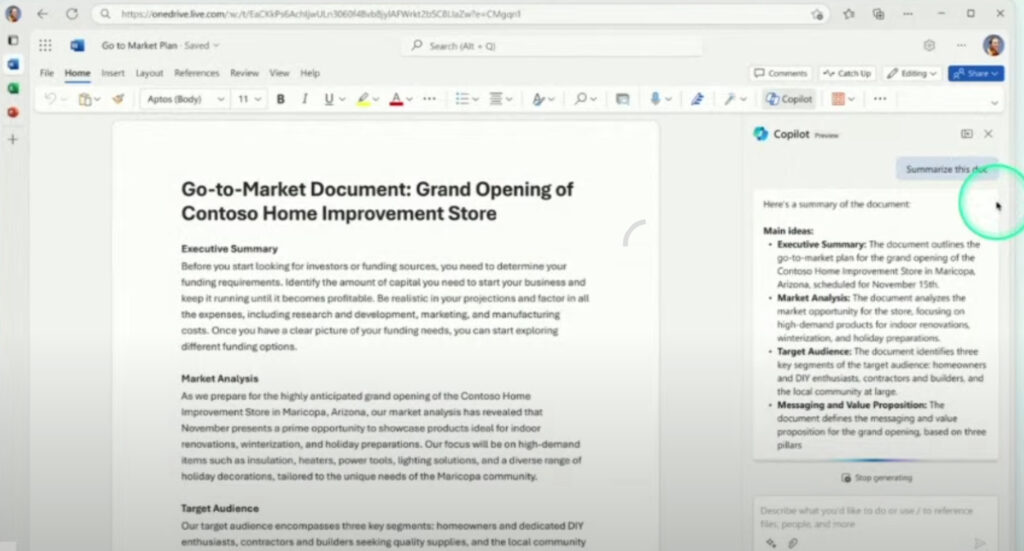
  • Word: Copilot could draft, rewrite, and summarize documents
  • Excel: It could analyze data, generate formulas, and create visualizations
  • PowerPoint: It could design slides, suggest layouts, and generate speaker notes
  • Outlook: It could summarize emails, suggest replies, and schedule meetings
  • Teams: It could recap meetings, generate action items, and assist with collaboration

This wasn’t just automation—it was augmentation. Copilot became a creative partner, helping users express ideas faster, clearer, and more beautifully

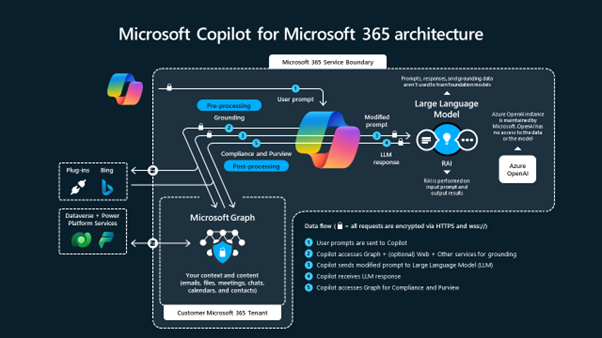
An Example

Enterprise Rollout and Pricing

In July 2023, Microsoft revealed the pricing for Microsoft 365 Copilot: $30 per user per month for enterprise customers. While some balked at the cost, many saw it as a worthwhile investment – especially for teams looking to boost productivity and reduce manual work.

By November 2023, Copilot was officially available to enterprise customers, and adoption began to surge across industries – from law firms and marketing agencies to hospitals and universities – 

Windows Copilot: AI in the Operating System

In October 2023, Microsoft introduced Windows Copilot, embedding AI directly into Windows 11. Accessible via a sidebar, Windows Copilot could:

  • Adjust system settings
  • Launch apps
  • Summarize documents
  • Answer questions
  • Perform tasks across the OS

This marked a major shift: Copilot was no longer just a productivity tool—it was becoming a core part of the user interface, guiding users through their digital lives.

Copilot for Security and Developer Tools

In 2024, Microsoft expanded Copilot into specialized domains:

  • Copilot for Security: Announced in April 2024, this tool helped cybersecurity professionals detect threats, analyze logs, and respond to incidents using natural language
  • GitHub Copilot X: An evolution of GitHub Copilot, this version added voice capabilities, chat interfaces, and deeper IDE integration for developers
  • Copilot Studio: A low-code platform allowing businesses to build custom copilots tailored to their workflows

These expansions showed that Copilot wasn’t just for general users—it was becoming indispensable for technical professionals, too.

Cross-Platform Reach and the Copilot Key

By 2025, Copilot had become truly cross-platform:

  • Available on Windows, macOS, Android, iOS, and the web
  • Integrated into Microsoft Edge, Teams, Outlook, and Office apps
  • Accessible via voice, text, and even a dedicated Copilot key on new Windows keyboards

The Copilot key, introduced in early 2025, replaced the Menu key and offered instant access to AI assistance. It was a symbolic gesture: AI was no longer an add-on—it was a core part of the computing experience.

Intelligence Upgrade: GPT-4 Turbo and GPT-4o

Throughout 2024 and 2025, Microsoft upgraded Copilot’s intelligence:

  • GPT-4 Turbo: A faster, cheaper variant of GPT-4, used in Copilot Pro
  • GPT-4o (Omni): Introduced in May 2024, this model could handle text, image, and voice inputs natively, making Copilot more multimodal and responsive

These upgrades made Copilot smarter, faster, and more versatile—capable of understanding complex queries, generating creative content, and even interpreting images and screenshots.

Creative Features: Designer, Image Gen, and Pages

Copilot also became a creative powerhouse:

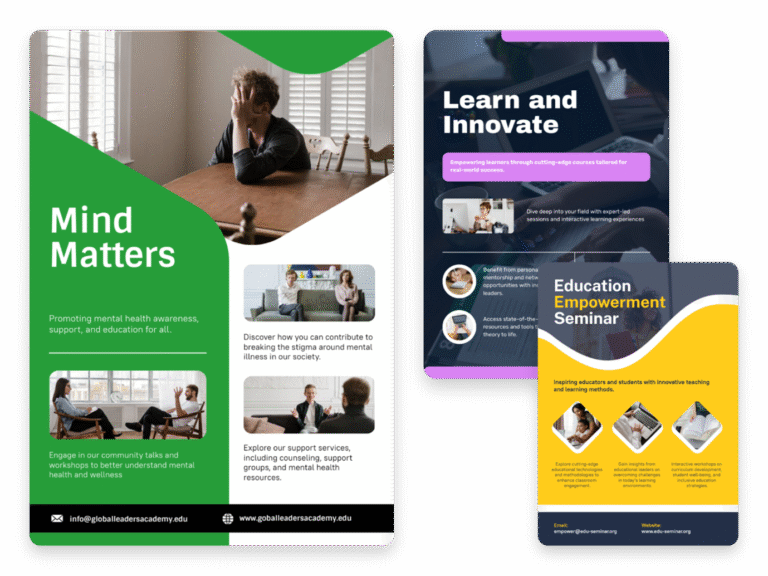
  • Microsoft Designer: An AI-powered design tool for creating social media posts, flyers, and presentations
  • Image Generation: Users could generate custom images using text prompts
  • Copilot Pages: A new feature allowing users to co-create long-form content with Copilot in a dedicated workspace

These tools empowered creators, marketers, and storytellers to bring their visions to life—without needing advanced design or coding skills.

Voice, Vision, and Emotional Intelligence

Copilot’s interface evolved to include:

  • Voice chat: Users could speak to Copilot and receive spoken responses
  • Vision: On mobile and desktop, Copilot could interpret images, screenshots, and camera input
  • Emotional intelligence: Copilot could respond empathetically, celebrate milestones, and offer encouragement during setbacks

This wasn’t just functional – it was human. Copilot became a companion, not just a too

Impact and Adoption

By late 2025, Copilot had:

  • Over 100 million users across platforms
  • Deep integration into Microsoft 365, Windows, and Edge
  • A growing ecosystem of third-party plugins, custom copilots, and enterprise solutions

It was used by students, CEOs, developers, designers, and everyday users—each finding their own rhythm with their AI companion

The Philosophy: Amplify, Not Replace

Microsoft’s vision for Copilot has always been clear: AI should amplify human potential, not replace it. Copilot is designed to:

  • Handle repetitive tasks
  • Offer creative suggestions
  • Provide strategic insights
  • Support emotional and intellectual growth

As Satya Nadella put it, “We believe in a future where every person has a Copilot.”

Ending With Reflection:

Microsoft Copilot is more than a product – it’s a paradigm shift, a creative ritual, and a digital sanctuary. It began as a whisper in Bing Chat, grew into a chorus across Microsoft 365, and now sings across every screen, every app, every moment of need.

It is the co-author of your dreams, the co-strategist of your plans, and the co-pilot of your legacy.

Story which has begun, never to end