A Journey Through History, Romance, and Fairy Tales
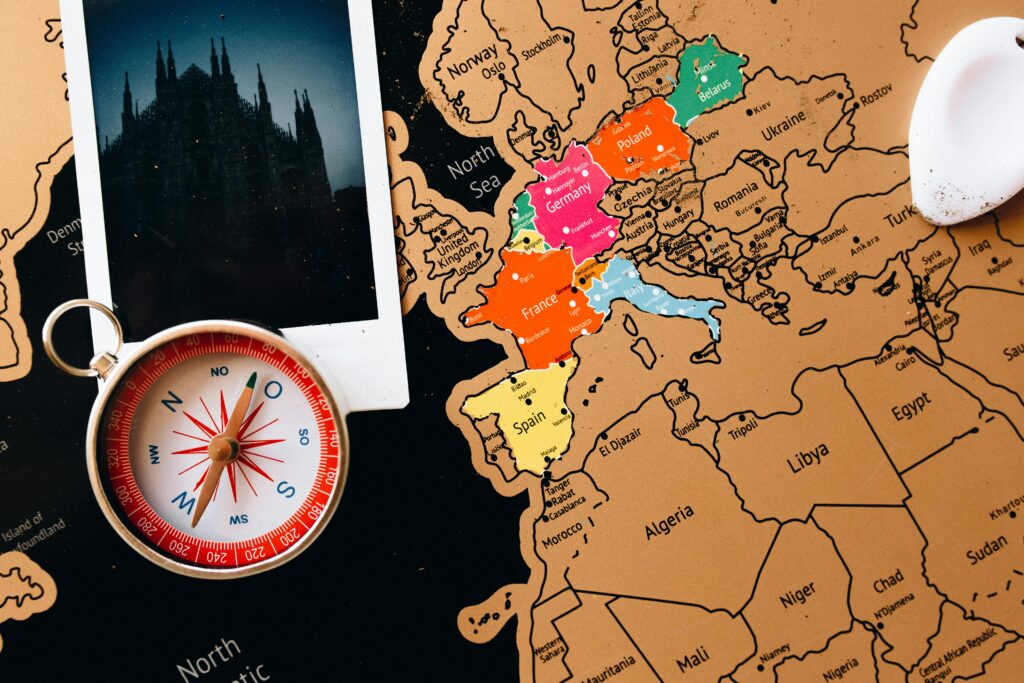
Germany is a dream come true for anyone enchanted by castles. With more than 20,000 scattered across the country, you’ll find everything from crumbling hilltop fortresses to grand palaces that look as if time has barely touched them.
These are not just stone walls and towers, they’re living reminders of centuries filled with feudal rivalries, royal ambition, and medieval intrigue.
Some inspired Disney’s fairy tales, while others remain hidden treasures tucked deep in forested valleys. Exploring them feels less like sightseeing and more like stepping straight into the pages of a storybook.
Why
German Castles Captivate the World?
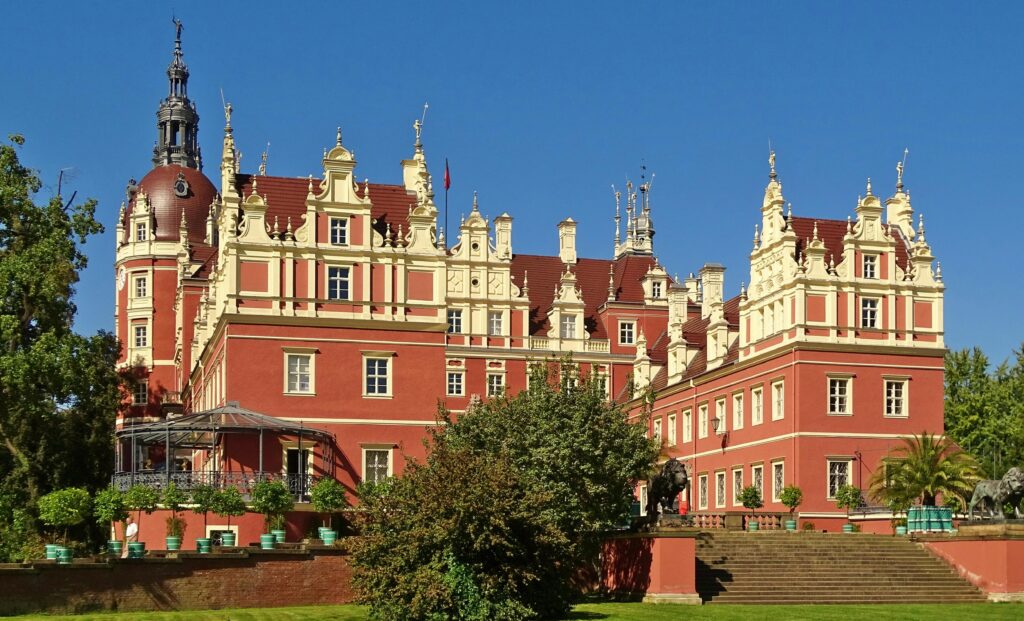
German castles have become globally famous for their fairy tale aesthetics and rich historical narratives.
These structures have profoundly influenced popular media and helped define Germany’s cultural identity.
Many feature stunning characteristics and enchanting stories that have captured imaginations for generations.
The castles’ popularity has also proven economically significant with“Neuschwanstein” alone, which nearly bankrupted Bavaria during construction, now allows Germany to recoup its investment a hundredfold as massive crowds pay to visit Europe’s most popular castle.
The Most Spectacular Castles in Germany
1. Neuschwanstein Castle
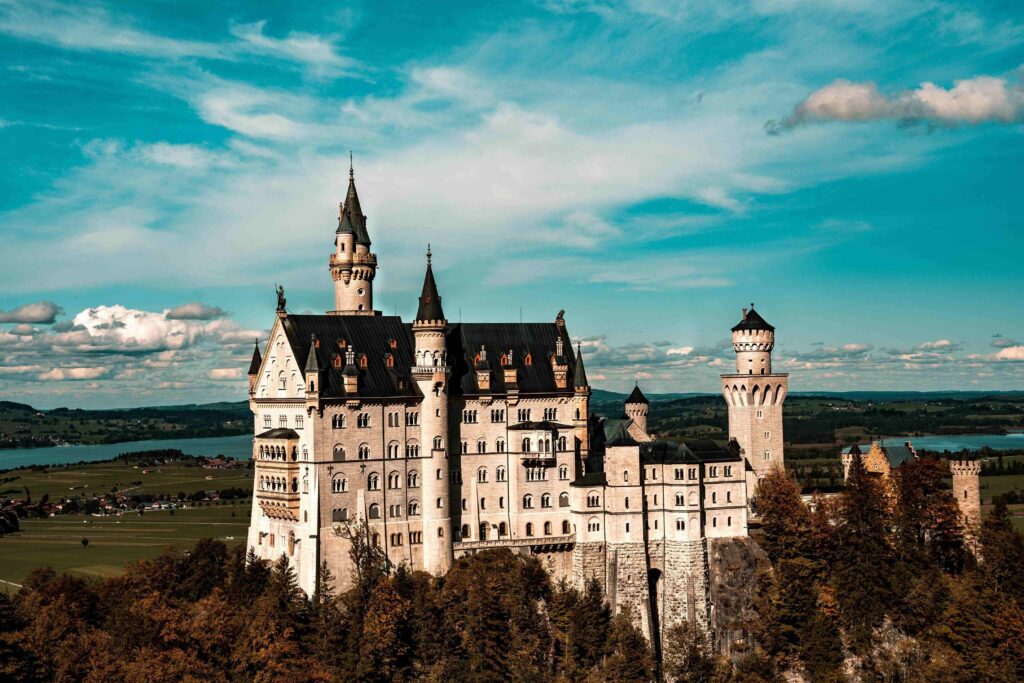
No discussion of German castles can begin anywhere else. Neuschwanstein Castle stands as the ultimate fairy-tale fortress, dreamed up by King Ludwig II of Bavaria in the 19th century.
Perched dramatically above the village of Hohenschwangau, this white limestone palace with its pointed towers and alpine backdrop looks like it was pulled straight from a storybook—and it actually inspired Disney’s Sleeping Beauty Castle.
The Story – King Ludwig II built this castle more for fantasy than defense, creating a medieval-themed retreat despite living in the modern 19th century.
The lavish interior, inspired by Richard Wagner’s Romantic operas, features damsels in distress, dragons, and knights in gleaming armour.
Ludwig positioned his castle on the hilltop not for strategic reasons, but simply because he liked the view. Despite its medieval appearance, Neuschwanstein included cutting-edge amenities like flushing toilets and central heating.
The castle’s story ended tragically when Bavarians complained about Ludwig’s extravagant spending. His sanity was questioned, and shortly after, the 40-year-old king was found dead in a lake under suspicious circumstances, ending work on his medieval fantasy. Today, it’s one of the most famous castles in the world and attracts visitors from across the globe.
2. Burg Eltz
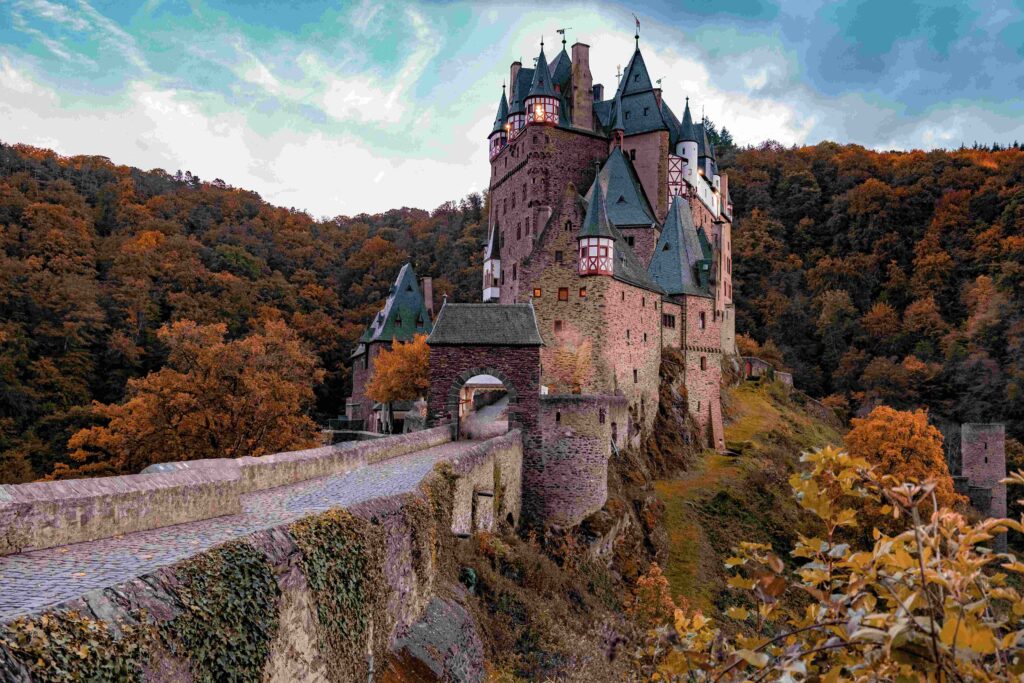
Tucked into a forested valley near the Moselle River, Burg Eltz represents what a proper medieval castle should look like.
This remarkable fortress has been owned by the same family for over 850 years and has survived centuries of conflict without ever being destroyed.
The Story: With its high towers, timber-framed upper stories, and steep roofs, Burg Eltz stands as one of the finest examples of German medieval architecture.
It’s one of the few castles in Germany that haven’t been destroyed and remarkably, it’s still owned by the same family that possessed it in the 12th century.
While two wings are open to the public between April and October, one wing remains a private residence where family members still live.
The guided tour showcases original furnishings and weapons from centuries ago, and the castle’s survival for 850 years while surrounded by lush greenery makes it particularly beloved.
3. Heidelberg Castle
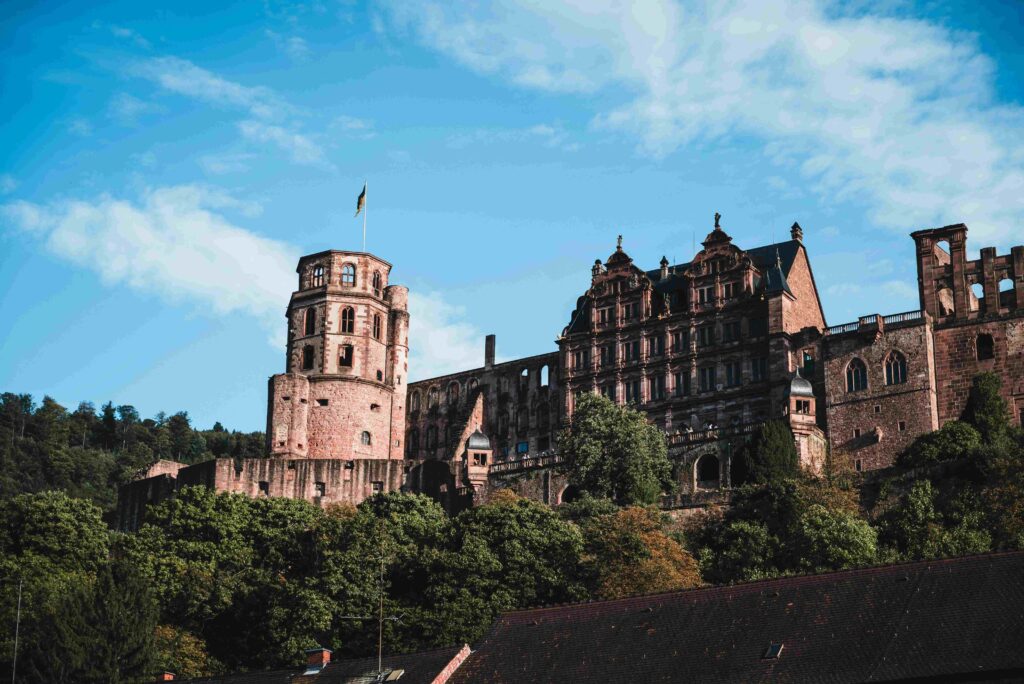
Rising above the Neckar River, Heidelberg Castle now stands as a romantic ruin that once served as the seat of the powerful Palatinate electors. This dramatic structure mixes Gothic and Renaissance architectural styles and continues to dominate the skyline of Heidelberg.
The Story: The castle’s turbulent history includes destruction by French troops in the late 1600s, followed by additional damage from lightning strikes.
Rather than being fully restored, its broken walls and empty windows have been preserved as romantic ruins, now drawing tourists instead of emperors.
Visitors shouldn’t miss the Great Tun, a massive wine barrel that speaks to the region’s viticulture heritage, or the panoramic views over the Old Town that make the climb worthwhile.
4. Hohenzollern Castle
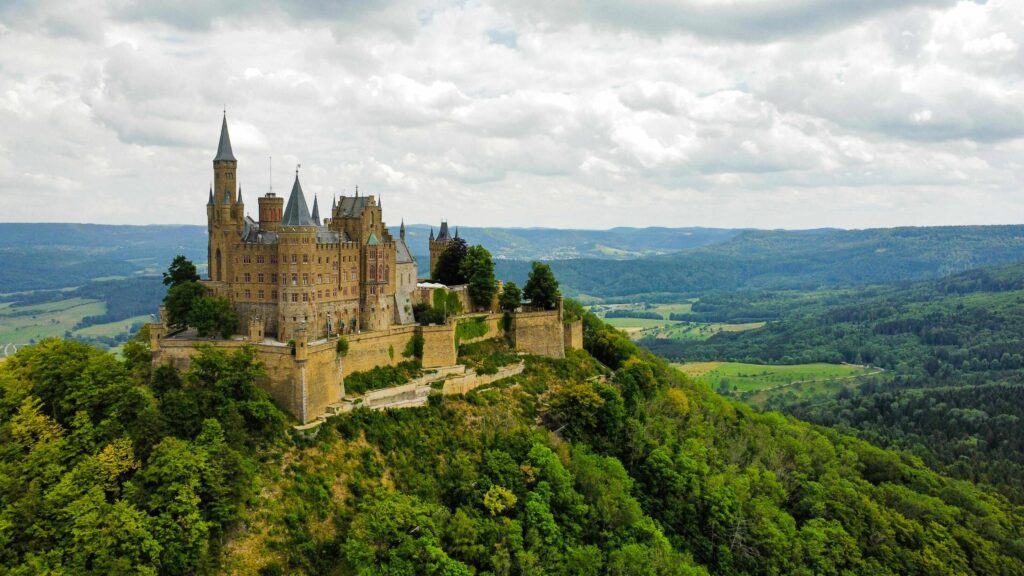
Perched on a hilltop in Baden-Württemberg, Hohenzollern Castle looks like it belongs on a movie poster. This fortress serves as the ancestral seat of the Hohenzollern family, which produced Prussian kings and German emperors.
The Story: The current castle, built in the 19th century, is actually the third structure on this site. It’s filled with royal memorabilia, including personal items belonging to King Frederick the Great.
The castle delivers serious medieval energy with its high walls, turrets, and ramparts, though all executed with distinctive 19th-century flair.
It’s one of the most popular reader suggestions and beloved among locals across Germany, adding royal grandeur to its already impressive hilltop setting.
5. Mespelbrunn Castle
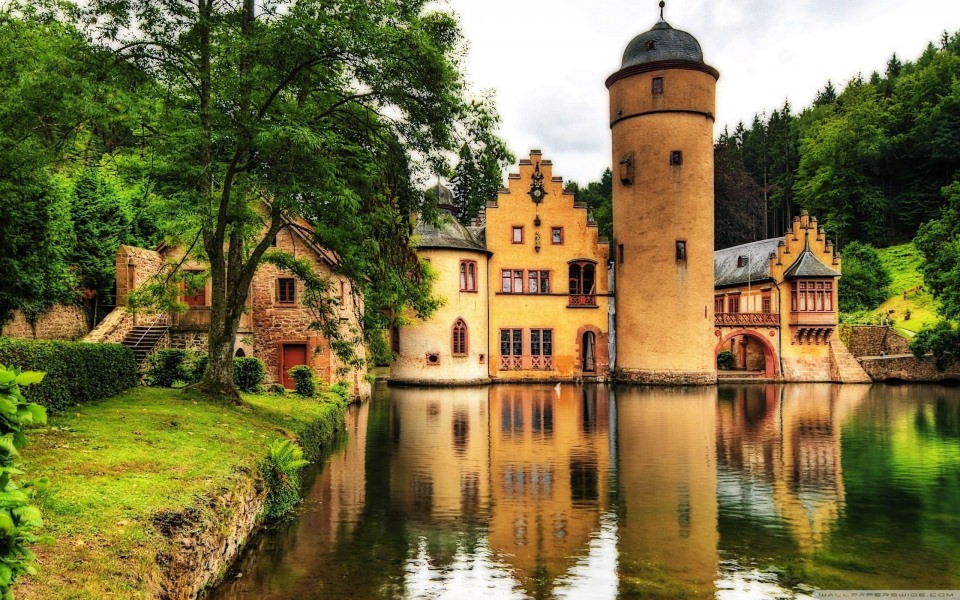
Hidden in the Spessart forest, Mespelbrunn Castle is surrounded by deep water, is a Renaissance gem that offers something different from the typical castle experience.
Unlike most German castles, it wasn’t destroyed or dramatically altered over the centuries, making it feel like a genuine time capsule.
The Story: Still privately owned, Mespelbrunn provides a more peaceful visit than the major tourist magnets. Its unique combination of defensive towers and elegant living quarters illustrates how castles evolved from purely military fortresses into luxurious aristocratic homes.
The moat surrounding the castle and its forest setting create an atmosphere of tranquillity that contrasts beautifully with the more dramatic mountaintop fortresses elsewhere in Germany.
6. Lichtenstein Castle
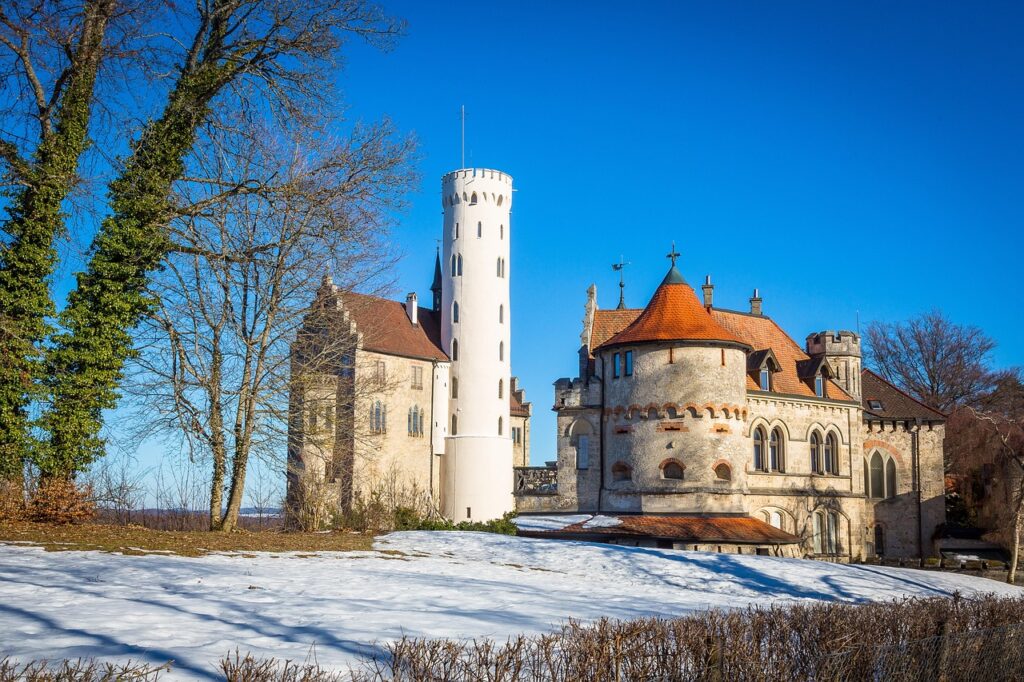
Lichtenstein Castle ranks among Germany’s hidden gems. While many locals know about this beautiful castle, few foreign tourists visit it—which is unfortunate given its stunning appearance
The Story: Located quite near the more famous Hohenzollern Castle, Lichtenstein offers a quieter alternative for those seeking to avoid crowds.
Its dramatic position and well-preserved architecture make it a worthy destination for castle enthusiasts willing to venture off the beaten path
7. Marksburg Castle
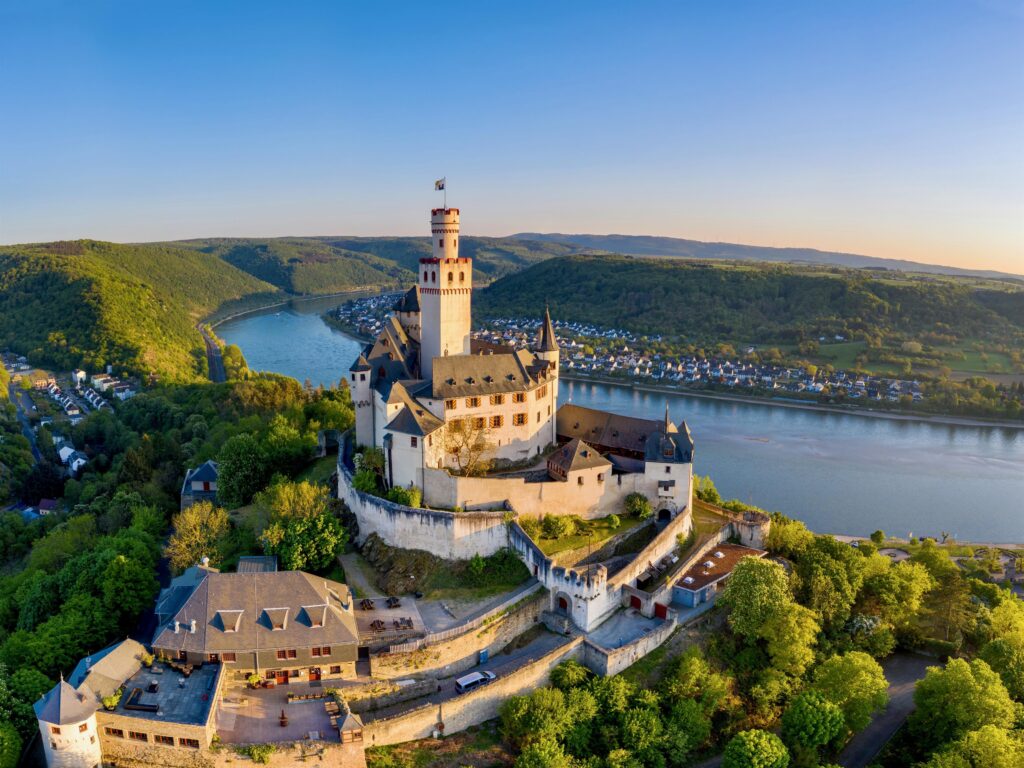
This medieval fortress stands proudly above the Rhine River town of Braubach, Marksburg Castle holds a unique distinction among Rhine castles, it’s the only hilltop castle along the Middle Rhine that has never been destroyed.
The strong fortress remains remarkably intact, offering visitors an authentic glimpse into castle life as it truly was centuries ago.
The Story: Unlike many German castles that were rebuilt in romantic styles during the 19th century, Marksburg preserves its original medieval character with genuine fortifications, living quarters, and defensive features.
The castle’s survival is remarkable considering the countless wars that swept through the Rhine Valley over the centuries.
Walking through its rooms feels like stepping back in time, the armory displays authentic weapons, the kitchen shows how medieval meals were prepared, and the torture chamber (a grim but historically accurate feature) reminds visitors that castles weren’t always romantic places.
8. Schwerin Castle
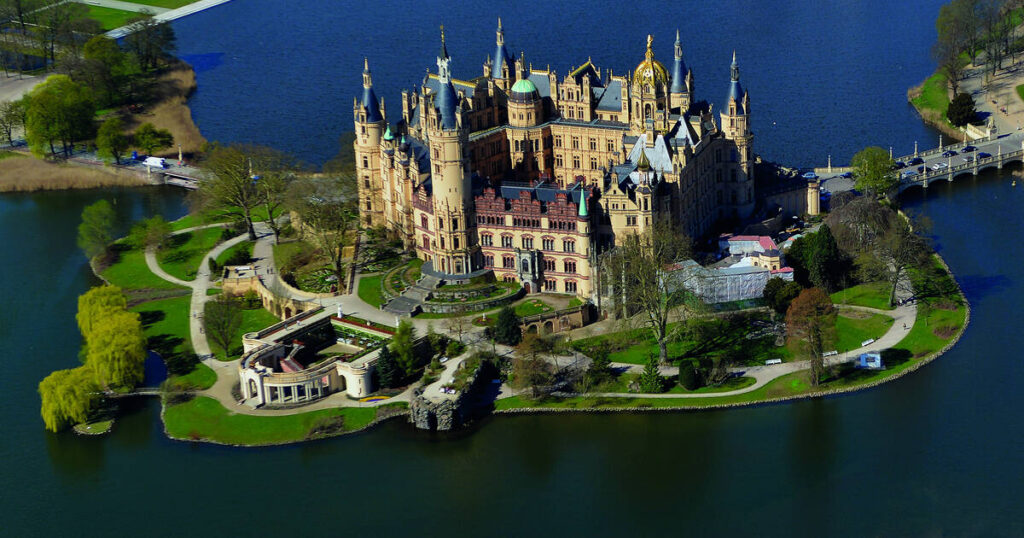
Rising from its own island in Lake Schwerin, Schwerin Castle looks like something conjured by a particularly imaginative fairy godmother.
With its golden domes, countless turrets, and ornate facades reflected in the surrounding waters, this palace represents the pinnacle of romantic historicism architecture.
The Story: While a fortress has stood on this island for over a thousand years, the current palace dates from the mid-19th century when Grand Duke Friedrich Franz II commissioned an extravagant rebuild inspired by French châteaux. The result features more than 600 rooms with a fantastical blend of Renaissance and Baroque elements.
Schwerin Castle comes with its own resident ghost, Petermännchen (Little Peterman), a friendly household spirit in 17th-century clothing who supposedly protects the castle and brings good luck to those who see him.
Today, the castle serves as the seat of the state parliament of Mecklenburg-Vorpommern, making it one of the few German castles still functioning as a government building.
Its location in northeastern Germany means fewer international tourists visit compared to Bavaria’s famous castles, but those who make the journey are rewarded with one of Germany’s most photogenic and underrated palaces, complete with impressive baroque gardens.